
study abroad in germany
To study abroad in Germany, international students apply directly to a German university or through an exchange program, choose between English- or German-taught degrees, and cover living costs of roughly €800–€1,200 a month — while paying little to no tuition at most public universities. Germany hosts over 400,000 international students across more than 20,000 programs, making it one of the most affordable and academically respected destinations in the world for anyone who wants to study abroad in Germany in 2026. Many students also pair their degree with a hands-on Ausbildung apprenticeship to build practical, job-ready skills alongside their studies.
1. Why Study Abroad in Germany?
Students choose to study abroad in Germany because public universities charge little or no tuition, degrees are globally recognized, the job market is strong, and the country offers a high quality of life at a relatively low cost compared to the US, UK, or Australia.
Germany is one of the top non-English-speaking study destinations, and for good reason. Public universities are state-funded, so tuition is free or limited to a small fee — rare among developed countries. German degrees also carry strong global recognition, especially in engineering, business, and the sciences, making graduates competitive worldwide.
Beyond academics, deciding to study abroad in Germany means access to central European travel, a stable economy, and a large international student community. Most students who study abroad in Germany cite this mix of quality and affordability as the deciding factor over other destinations. The official Study in Germany portal offers a useful overview of what to expect before you commit to a program.
2. Types of Study Abroad Programs in Germany
Study abroad programs in Germany generally fall into three categories: full degree programs (Bachelor’s, Master’s, PhD), semester or year-long exchange programs through a home university, and short-term summer or language programs.
Here’s how the main options break down:
- Full degree programs: International students enroll directly in a German university for a complete Bachelor’s, Master’s, or doctoral degree, usually lasting 3–4 years for undergraduate study and 1–2 years for a Master’s.
- Exchange semesters: Many universities partner with German institutions through programs like Erasmus+ (for EU students) or bilateral exchange agreements, letting students spend one or two semesters abroad while staying enrolled at their home university.
- Summer and short-term programs: These run for a few weeks to a couple of months and usually combine intensive German language instruction with cultural immersion — a popular entry point for students testing the waters before committing to a full degree.
- Dual and combined programs: Some students blend academic study with company-based training. If you’re weighing this route, our guide to dual study programs in Germany breaks down how that model works alongside a degree.
Whichever route you choose, all study abroad programs in Germany require some proof of academic standing, language ability, and financial means. Anyone comparing options to study abroad in Germany should match the program type to their goals — a full degree suits long-term plans, while an exchange semester works well for testing the experience first.
3. How to Study Abroad in Germany: Step-by-Step
Choose a program and university, check admission requirements, prepare language certificates, apply through uni-assist or directly, secure a blocked bank account, apply for a student visa, and arrange housing before arrival.
A realistic step-by-step process looks like this:
- Choose your program and university. Decide between an English- or German-taught program and shortlist universities using Germany’s official databases.
- Check entry requirements. Most programs require a recognized secondary or university qualification, plus a language certificate (IELTS/TOEFL for English programs, TestDaF/DSH for German-taught ones).
- Apply through the right channel. Many universities use a centralized platform called uni-assist for international applications, while others accept direct applications.
- Open a blocked account (Sperrkonto). This shows the German authorities you can financially support yourself, typically requiring around €11,904 for the year as of current guidelines.
- Apply for a student visa at the German embassy or consulate in your home country, once you have an admission letter.
- Arrange housing — student dormitories fill up fast, so apply early or look into shared apartments (WGs).
- Register locally (Anmeldung) within your first weeks in Germany, and enroll formally at your university.
Anyone researching how to study abroad in Germany should start at least 6–9 months ahead, since visa processing and document checks take time. Following these steps closely is the most reliable way to study abroad in Germany without last-minute delays.
4. Cost of Studying Abroad in Germany
Studying abroad in Germany typically costs €800–€1,200 per month for living expenses, while tuition at public universities is free or limited to a small semester fee (usually €150–€350), making it one of the most affordable study destinations globally.
Here’s a rough monthly budget breakdown for someone planning to study abroad in Germany:
| Expense | Estimated Monthly Cost |
|---|---|
| Rent (shared housing) | €400–€600 |
| Food and groceries | €200–€250 |
| Health insurance | €120–€140 |
| Transport | €30–€80 (often discounted for students) |
| Semester contribution fee | €150–€350 (per semester, not monthly) |
Private universities can charge several thousand euros per semester, so confirm a program’s fee structure early. Still, anyone budgeting to study abroad in Germany will find the overall cost far lower than the US, UK, or Australia.
5. Can You Study Abroad in Germany for Free?
Yes — it’s genuinely possible to study abroad in Germany for free, since almost all public universities charge no tuition for Bachelor’s and most Master’s programs, regardless of nationality. Students still cover living costs, but tuition itself isn’t the barrier it is in many other countries.
6. Study Abroad in Germany in English
Yes, it’s fully possible to study abroad in Germany in English — the country offers over 1,500 English-taught degree programs, especially at the Master’s level, in fields like engineering, business, and computer science.
English-taught options have expanded rapidly as universities compete for international talent. Undergraduate programs in English are less common, but Master’s and PhD programs are widespread, especially in STEM and business. Choosing to study abroad in Germany in English removes one of the biggest early barriers, though picking up conversational German is still recommended for daily life and part-time work. For a closer look at fully English-taught, tuition-free options, see our guide on studying in Germany in English for free.
7. Scholarships for Studying Abroad in Germany
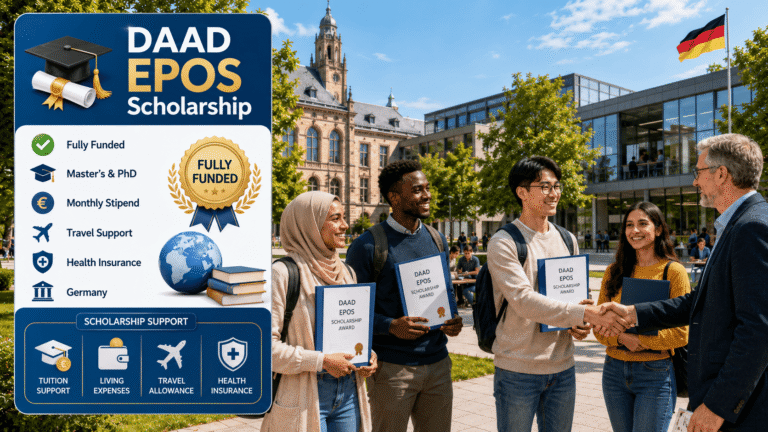
Scholarships for studying abroad in Germany are widely available through DAAD (the German Academic Exchange Service), Erasmus+, and individual university funds, often covering monthly stipends, travel costs, and sometimes health insurance.
Popular funding sources include:
- DAAD Scholarships: Germany’s largest scholarship body offers funding for Bachelor’s, Master’s, and PhD students across almost every field, with monthly stipends and additional allowances. You can browse current listings directly on the official DAAD scholarship database.
- Erasmus+: Available to EU students (and some partner countries) for exchange semesters, covering a portion of living and travel costs.
- Deutschlandstipendium: A national scholarship program that awards merit-based funding to both German and international students.
- University-specific grants: Many institutions offer their own scholarships or fee waivers for high-performing international applicants.
Applying early is essential — most scholarships for studying abroad in Germany have deadlines 6–12 months ahead, and competition is strong. Funding can make it possible to study abroad in Germany with minimal out-of-pocket cost.
8. Visa and Document Requirements
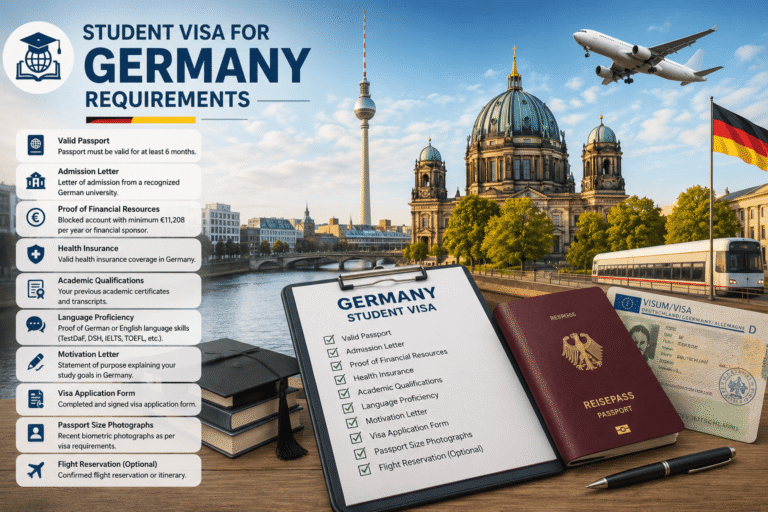
Non-EU students need a German student visa, an official university admission letter, proof of financial resources (usually a blocked account), health insurance, and language proficiency certificates before they can legally study abroad in Germany.
Key documents typically required:
- Valid passport
- University admission or conditional admission letter
- Proof of financial resources (blocked account or scholarship confirmation)
- Health insurance valid in Germany
- Language certificates (English or German, depending on the program)
- Academic transcripts and previous degree certificates
EU/EEA citizens don’t need a visa to study abroad in Germany, but still must register their address and enroll with a health insurance provider on arrival. Getting these documents organized early is the single biggest factor in a smooth move to study abroad in Germany.
9. Best Cities and Universities
Popular cities for students who study abroad in Germany include Berlin, Munich, Heidelberg, Hamburg, and Cologne — each home to highly ranked universities and large international student communities.
- Berlin: A hub for tech, startups, and the arts, with universities like Humboldt and Freie Universität Berlin.
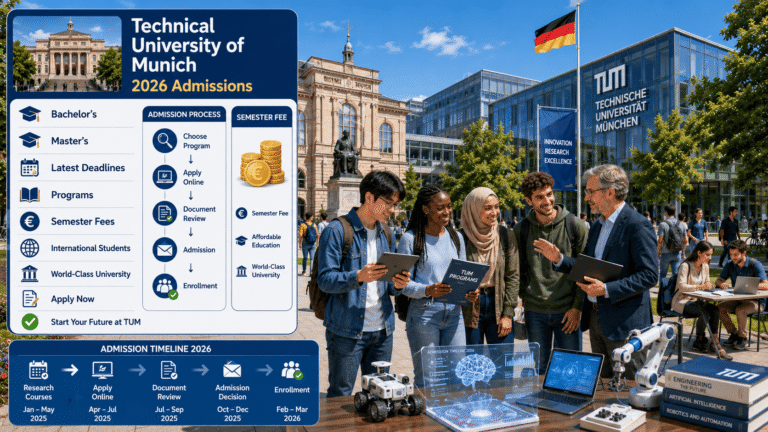
- Munich: Home to the Technical University of Munich (TUM) and Ludwig Maximilian University, both consistently ranked among the best in Europe.
- Heidelberg: Germany’s oldest university town, known for research strength and a smaller, tight-knit academic community.
- Hamburg: A major port city with strong business and international relations programs.
- Cologne: Known for a lively student scene and strong programs in economics and media.
Choosing where to study abroad in Germany often comes down to program strength, cost of living, and whether you prefer a big city or a quieter university town. Students who study abroad in Germany in a smaller city, like Heidelberg, often find lower rent and a tighter community than in Berlin or Munich.
10. Internships in Germany for English Speakers
Internships in Germany for English speakers are increasingly available, especially in multinational companies, tech startups, and English-taught university programs that build internships directly into the curriculum.
Many students pair their time to study abroad in Germany with a practical internship before graduating. International companies in Berlin, Munich, and Frankfurt often hire English-speaking interns, particularly in software, marketing, and finance. University career centers are a good starting point, and some English-taught programs include a mandatory internship semester — a practical way to gain German work experience without needing fluency from day one. Students who want a fully structured alternative can also look into Ausbildung in Germany, which combines paid company training with vocational school instead of a traditional internship.
11. Frequently Asked Questions
Is it worth it to study abroad in Germany?
Yes, for most students. Low tuition, strong degree recognition, and a robust job market make it one of the best-value places to study abroad in Germany compared to English-speaking countries with far higher costs.
How much does it cost to study abroad in Germany?
Tuition at public universities is typically free or limited to a small semester fee, while living costs average €800–€1,200 per month depending on the city.
Can I study abroad in Germany without knowing German?
Yes. Over 1,500 English-taught programs, mostly at the Master’s level, allow students to study abroad in Germany in English, though learning basic German is recommended for daily life.
What GPA or grades do I need to study abroad in Germany?
Requirements vary by university and program, but competitive programs generally expect solid academic performance and language proficiency certificates matching the program’s teaching language.
How long does the visa process take?
Processing times vary, but plan for 8–12 weeks after your admission letter to secure a student visa — building this into your timeline is key to a smooth start when you study abroad in Germany.
Are there age limits for studying abroad in Germany?
No formal age limit applies to most degree programs, and many scholarships and university programs welcome older or returning students.
Conclusion
Choosing to study abroad in Germany remains one of the smartest academic decisions available to international students today — low tuition costs, globally respected degrees, and a growing number of English-taught programs make it accessible regardless of background or budget. Whether you’re drawn by the idea of studying abroad in Germany for free, chasing a scholarship, or looking to pair your degree with a hands-on internship, Germany offers a clear, well-supported path from application to graduation. If you’re still exploring your options, take a look at our guides on what Ausbildung in Germany is, dual study programs in Germany, and studying in Germany in English for free to find the path that fits your goals. For official guidance, the DAAD and the government-backed Study in Germany portal remain the most trusted resources for anyone planning to study abroad in Germany in 2026.
About the Author





5 thoughts on “Study Abroad in Germany: The Complete 2026 Guide”