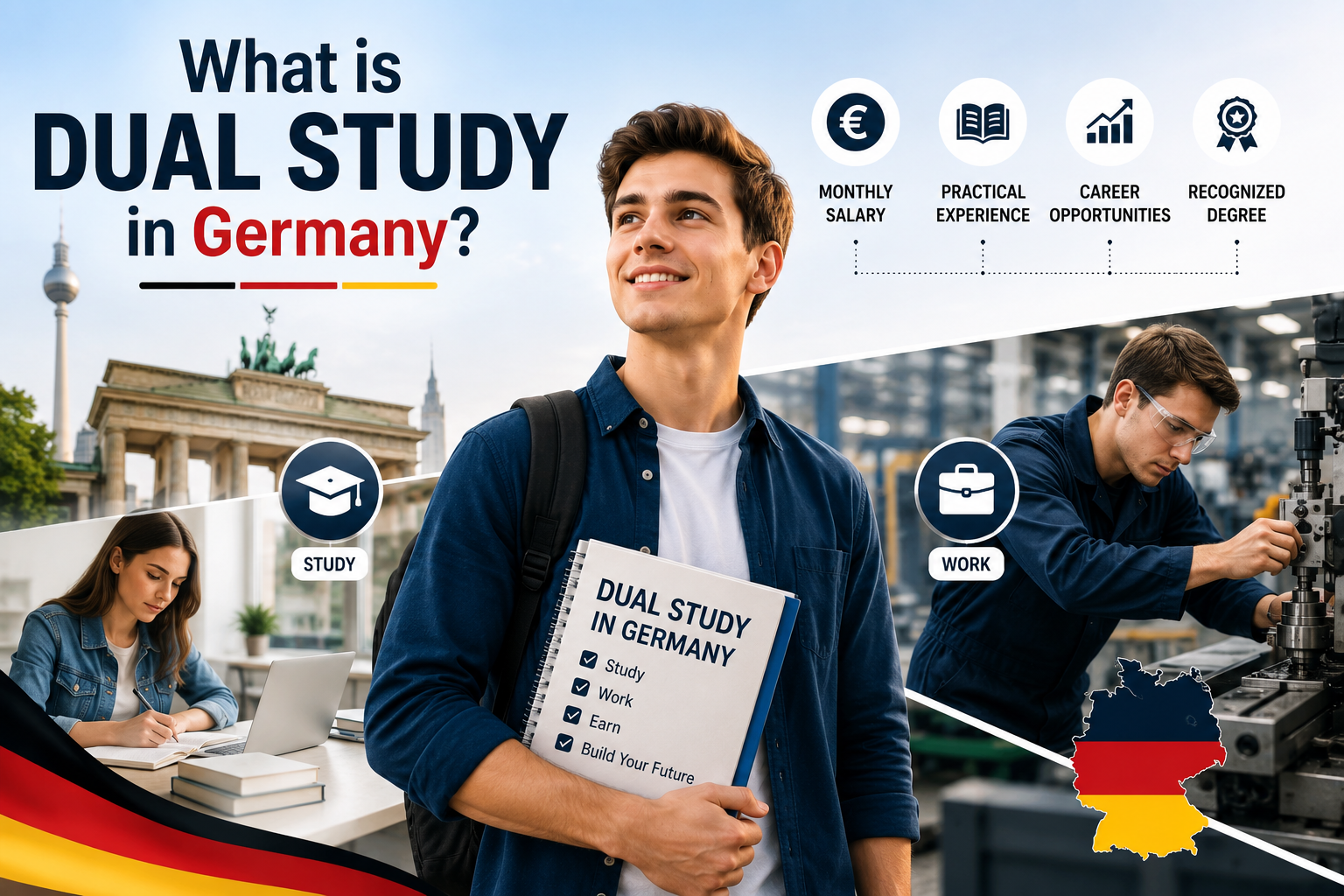
What is dual study in germany
Dual study in Germany is higher education model that combines classroom learning at university with paid, practical work training at a partner company. Students in dual study program in Germany earn a real salary every month, gain a recognized bachelor’s degree and graduate with two to three years of hands on work experience all at same time. This guide covers everything you need to know about dual study programmes in Germany, including eligibility, salary, top companies, and how international students can apply. If you’re also exploring vocational training options, check out our complete guide to Ausbildung in Germany on Ausbildungway.
What is Dual Study in Germany ?
Dual study in Germany, known locally as Duales Studium, is an educational system where students split their time between university or university of applied sciences and company. Unlike a normal degree, dual study in Germany is not purely academic students sign an employment contract with company before they even start, and they alternate between theory phases at university and practice phases at the company throughout the course. This hybrid model is part of wider approach known internationally as dual education system, which Germany has refined over decades.
- Combines a bachelor’s degree with paid vocational training
- Usually lasts 3 to 3.5 years
- Students receive a monthly salary from their partner company
- Ends with both a university degree and a professional qualification
This dual structure is exactly why dual study in Germany has become one of most popular study-and-work models for German and international students alike.
What is Dual Study Program in Germany ?
A dual study program in Germany is essentially a contract based partnership between three parties: the student, university and the company. The student is legally an employee of company while also being enrolled as a full time university student. This is what makes dual study program in Germany different from a normal part-time job during studies — the work is structured, supervised, and directly tied to the academic curriculum.
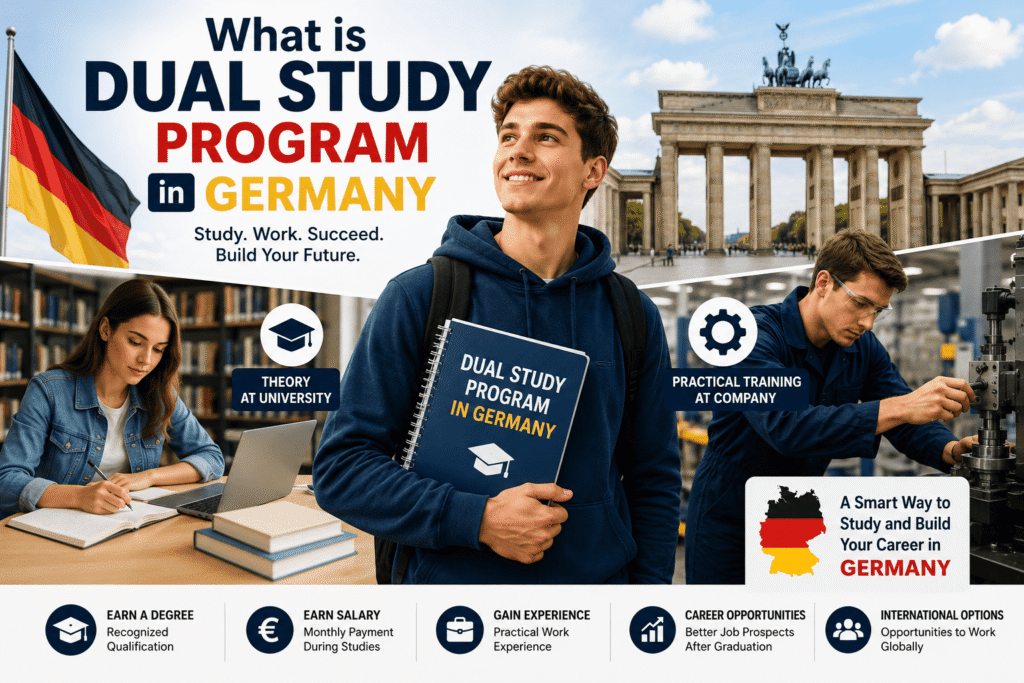
Every dual study program in Germany typically follows a rotating schedule:
- 3 months of theory at university
- 3 months of practical work at the partner company
- Repeated in cycles until graduation
Because training is so tightly integrated with real company work, employers see dual study in Germany graduates as job ready from day one, which significantly employment boosts prospects after graduation.
How Do Dual Study Programmes in Germany Work ?
Dual study programmes in Germany operate on simple but effective cycle. Before you can enroll even, you must first secure training contract with a company and only then does the company help you apply to partner university.
The process general for any dual study programmes in Germany works like this:
- Apply directly to companies not universities for dual study position
- Sign training contract that specifies your monthly salary and duration
- Enroll at partner university linked to that company
- Alternate between university semesters and company work blocks
- Graduate with a bachelor’s degree plus a vocational qualification Ausbildung, depending on model
This structure is what makes dual study programmes in Germany so attractive you are not just studying theory, you are applying it immediately in real workplace.
Types of Dual Study Programs in Germany:
There isn’t just one format. Dual study programs in Germany are generally divided into three main types:
- Ausbildungsintegrierend Training Integrated: Combines vocational apprenticeship (Ausbildung) with a bachelor’s degree. Best for students who want both trade certificate and a degree.
- Praxisintegrierend Practice Integrated: Focuses on structured practical work at a company alongside your degree, without a formal separate apprenticeship certificate.
- Berufsintegrierend / Studienintegrierend Career Integrated: Designed for people already working who want to study part time while continuing their job.
Choosing right type of dual study program in Germany depends on your career goals, whether you want formal trade qualification and how much work prior experience you already have. If you’re unsure which fits path you best, our Ausbildung guide breaks down vocational only route in more detail.
Dual Study in Germany for International Students:
Dual study in Germany for international students is possible, but it comes with few extra requirements compared to domestic applicants. Since most dual study in Germany require positions strong German language skills usually B2 or C1 level, international students need to prepare for both language tests and requirements academic before applying.
Key requirements for dual study in Germany for international students include:
- A recognized school leaving certificate equivalent to German Abitur or Fachhochschulreife
- German language proficiency B2/C1, since most programs are taught in German
- A valid visa/residence permit allowing study and part time work in Germany
- Direct application to offering companies dual study in Germany for international students, since spots are competitive
While it is more challenging than standard bachelor’s degree application, dual study in Germany for international students is one of few study paths that pays you salary from day one instead of costing tuition fees.
Dual Studies in Germany in English:
Finding dual studies in Germany in English is harder than finding German taught programs, but it is not impossible. Some universities of applied sciences Fachhochschulen and multinational companies now offer dual study Germany in English, especially in fields like international business, IT and engineering, where English is working language within global teams.
If you’re searching specifically for dual studies in Germany in English, keep these points in mind:
- English taught dual study in Germany options are concentrated mostly in business administration, computer science and engineering
- Multinational companies are likely more to offer dual study Germany in English tracks
- Even in English taught programs, basic German (A2/B1) is often required for daily life and communication workplace
- Competition for dual studies in Germany in English seats is higher due to availability limited
Salary in Dual Study Program in Germany Per Month:
One of biggest attractions of dual study program in Germany is the monthly salary. Since students are legally employees of their partner company, they are throughout paid their studies major difference from traditional universities, where students often have no guaranteed income.
Average monthly ranges salary for dual study in Germany (gross, before tax):
- First year approximately €800 – €1,000 per month
- Second year approximately €900 – €1,100 per month
- Third year approximately €1,000 – €1,300 per month
- Large companies like automotive or engineering firms can pay €1,200 – €1,600 per month or more
This salary structure is major reason why dual study program in Germany is more considered financially sustainable than standard degree, especially for students who need to support themselves during their studies. It’s worth comparing this to Ausbildung salaries in Germany, which follow similar paid training model.
Top Companies Offering Dual Study in Germany:
Many well known corporations actively recruit students for dual study in Germany positions every year. These companies not only pay salaries competitive but often guarantee a full time job offer after graduation.
Popular companies offering dual study in Germany programs include:
- BMW dual study program in Germany one of most sought-after options, especially for engineering, mechatronics and business administration tracks, offering strong pay and career progression within the automotive industry
- Mercedes-Benz / Daimler engineering and IT focused dual study tracks
- Siemens technical and IT dual study programs
- Bosch engineering, computer science, and business dual programs
- SAP IT and software-focused dual study opportunities
- Deutsche Bank and other financial institutions business and finance dual study tracks
The BMW dual study program in Germany in particular is known for combining strong salary, structured mentorship and near guaranteed employment after graduation, making it one of most competitive dual study applications in the country.
Eligibility Requirements for Dual Study in Germany:
To qualify for dual study in Germany, generally applicants need to meet both academic and language requirements set by universities and partner companies.
Basic eligibility for dual study in Germany usually includes:
- A university entrance qualification Abitur, Fachhochschulreife or an internationally recognized equivalent
- German language proficiency, typically B2 or higher, unless applying for an English track taught
- Strong grades in relevant subjects math and science for technical programs, for example
- Sometimes an aptitude test or interview conducted directly by hiring company
Because companies are money investing and training resources into each student, competition for dual study in Germany places can be intense, especially at well known employers. If your qualifications don’t yet meet these requirements, an Ausbildung in Germany can be useful stepping stone toward dual study path later on.
How to Apply for Dual Study Program in Germany:
Applying for dual study program in Germany is different from applying to a regular university, because you apply to company first, not the university.
Step by step application process for dual study in Germany:
- Research companies that offe dual study program in Germany in your field of interest
- Check university partnership linked to that company
- Prepare documents: CV, transcripts, language certificates and motivation letter
- Apply directly on the company’s career page often 6–12 months before start date
- Attend interviews or assessment days conducted by company
- Sign the training contract, then enroll at partner university
Since deadlines application for dual study in Germany can be very early sometimes a full year in advance, it’s important to start researching and applying well ahead of your intended start date.
Benefits of Dual Study in Germany:
There are reasons several why dual study in Germany continues to grow in popularity among students:
- No tuition fees in most dual public study programs
- Guaranteed monthly salary throughout study period
- Real work experience before graduation
- Higher employability, since many companies hire graduates after directly
- Smaller class sizes more offering personalized academic support
- Faster transition into the workforce compared to degrees traditional
These advantages explain why dual study in Germany has become preferred pathway for both German and international students who want practical, income generating route to bachelor’s degree.
FAQS About Dual Study in Germany
What is dual study in Germany ?
Dual study in Germany is combined education model where students study at university part time while working and earning a salary at a partner company, graduating with both degree and practical work experience.
What is dual study program in Germany suitable for ?
A dual study program in Germany is best suited for students who want career focused education, prefer earning money while studying and want direct entry into job market after graduation, especially in engineering, business and IT fields.
Is dual study in Germany good for international students ?
Yes, dual study in Germany for international students is a strong option, though it requires solid German language skills usually B2/C1 for most programs, along with valid visa and recognized school qualifications.
Can I find dual studies in Germany in English ?
Yes but options for dual studies in Germany in English are limited and found mostly in international business, IT and engineering programs at select universities and multinational companies.
How much do you earn in dual study program in Germany ?
Salary in dual study program in Germany typically ranges from around €800 to €1,600 per month, depending on company, industry and year of study, with increasing amounts each year.
Which companies offer the best dual study programs in Germany ?
Top employers include the BMW dual study program in Germany, along with Mercedes Benz, Siemens, Bosch and SAP, all of which offer strong pay, structured training and job high placement rates after graduation.
How long does dual study in Germany take ?
Most dual study in Germany programs last between 3 and 3.5 years, combining university semesters with work structured phases at partner company.
Conclusion:
Dual study in Germany offers unique combination of academic education, paid work experience and career strong prospects that few other study models can match. Whether you’re domestic student exploring dual study program in Germany or an international researching student dual study in Germany for international students, this pathway provides practical, financially sustainable way to earn degree. From well known employers like BMW dual study program in Germany to growing number of options for dual studies in Germany in English, opportunities within dual study programmes in Germany continue to expand every year. If you’re serious about combining education with real world experience, dual study in Germany is one of smartest study paths available today. For more guides on studying and training in Germany, visit Ausbildungway or read our breakdown detailed of what Ausbildung in Germany involves.
About the Author



Hi, this is a comment.
To get started with moderating, editing, and deleting comments, please visit the Comments screen in the dashboard.
Commenter avatars come from Gravatar.