
Public Universities in germany
Germany has become one of top choices for international students and reason behind this is its network of public universities in Germany. Every year thousands of students from Pakistan, India and other choose countries public universities in Germany because of quality high of education, globally recognized degrees and low cost of studying. If you are planning to study abroad in Germany understanding how public universities in Germany work will help you make decision right for your academic future.
In this article we will cover everything you need to know about public universities in Germany, including the top universities, tuition fees, admission requirements, application process, scholarships and living costs.
What are Public Universities in Germany ?
Public universities in Germany are institutions that are funded and regulated by German higher education system. Unlike private universities, public universities in Germany funding receive from state governments, which is why most of them offer free or very low cost education, even to international students. Germany currently has more than 400 higher education institutions and large majority of these are public universities in Germany.
Another point worth understanding is how German education system is structured. Germany’s higher education network includes research universities, technical universities and universities of applied sciences Fachhochschulen. Most institutions in each of these categories fall under umbrella of public universities in Germany, meaning they are state funded and open to both domestic and international applicants. If you are more interested in a work integrated path instead of traditional degree, it is also reading worth about what Ausbildung in Germany is and how it compares to classic university education.
Why Choose Public Universities in Germany ?
There are reasons several why these institutions attract students from all over world. Beyond academic value, students also benefit from safe environment, excellent public infrastructure and multicultural student community that makes settling in much easier for newcomers. Here are main advantages:
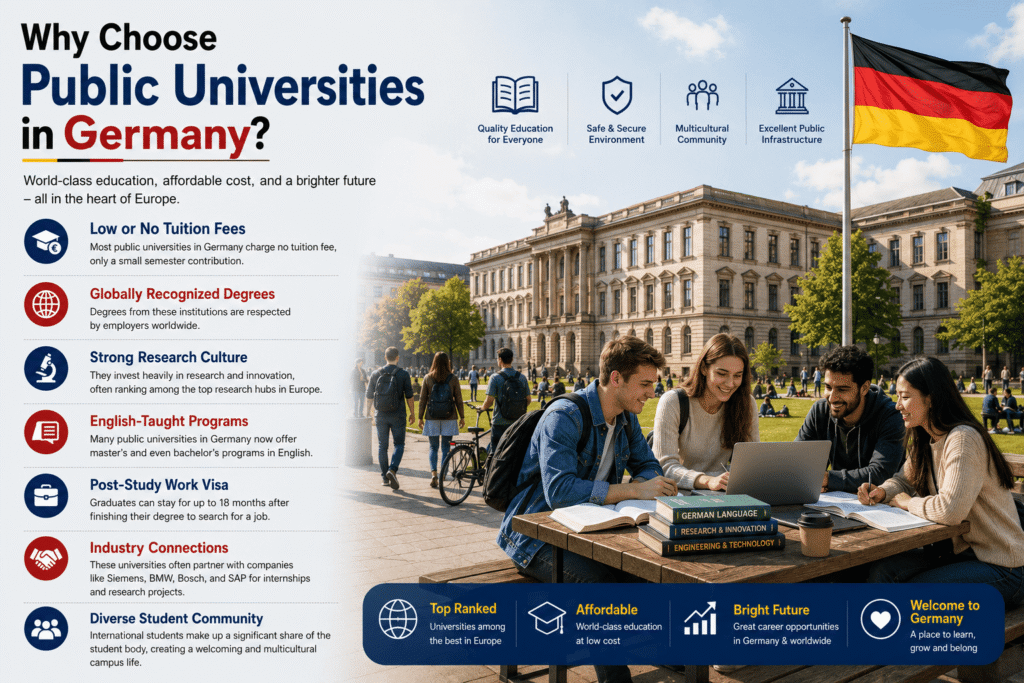
- Low or no tuition fees Public universities in Germany charge no tuition fee only small semester contribution.
- Globally degrees recognized Degree from these institution are respected by worldwide employers.
- Strong culture research They invest heavily in research and innovation, often ranking among top research hubs in Europe.
- English taught programs Many public universities in Germany now offer master’s and even bachelor’s programs in English. You can more read in our guide on how to study in Germany in English for free.
- Post study visa work Graduates stay can for up to 18 months after finishing their degree to search for job.
- Industry connection These universities partner often with companies like Siemens, BMW, Bosch and SAP for internships and projects research.
- Diverse community student International students make up significant share of student body at most public universities in Germany, creating welcoming and campus multicultural life.
List of Top Public Universities in Germany:
Here is a list of some of best public universities in Germany based on international rankings:
| University | Location | Known For |
|---|---|---|
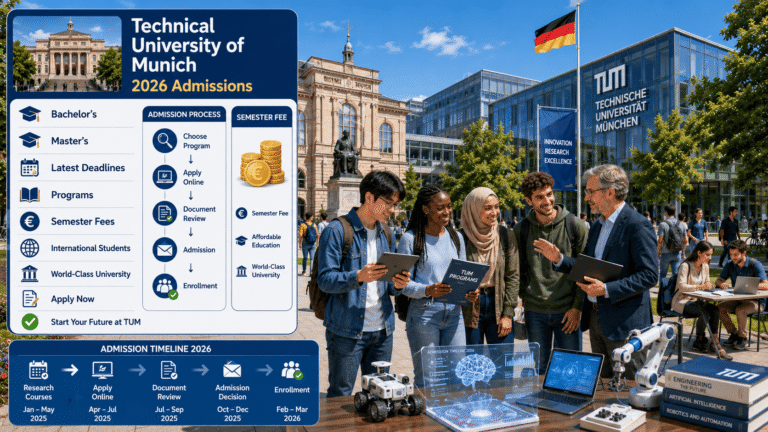
| Technical University of Munich (TUM) | Munich | Engineering, AI, Technology |
| Ludwig Maximilian University (LMU) | Munich | Social Sciences, Humanities |
| Heidelberg University | Heidelberg | Medicine, Life Sciences |
| RWTH Aachen University | Aachen | Engineering, Robotics |
| Humboldt University of Berlin | Berlin | Social Sciences, Data Science |
| Freie Universität Berlin | Berlin | Natural Sciences, Humanities |
| University of Freiburg | Freiburg | Research, Environmental Sciences |
| Karlsruhe Institute of Technology (KIT) | Karlsruhe | Engineering, IT |
| University of Stuttgart | Stuttgart | Engineering, Automotive Design |
| TU Berlin | Berlin | Architecture, Urban Planning |
All of these institutions are known well public universities in Germany that offer range wide of programs for both undergraduate and graduate students. Beyond this tier top group there are dozens of other options strong across spread smaller cities like Leipzig, Dresden, Mainz and Bonn, which are often overlooked but offer teaching excellent quality, lower living costs and quieter environment for study focused. Choosing between these options usually comes down to your field intended of study, budget and preferred city size.
Tuition Fees at Public University in Germany
One of biggest attractions of public universities in Germany is low cost of education. In most German states public universities in Germany do not charge tuition fees for bachelor’s or master’s degree programs. Instead students only need to pay contribution semester, which ranges usually between EUR 150 and EUR 350.
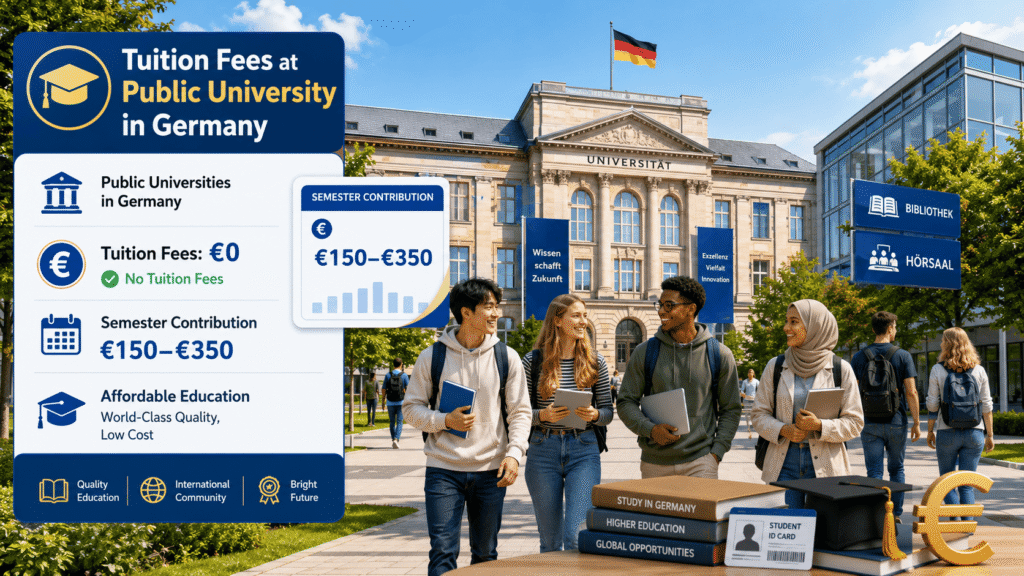
This semester fee at public universities in costs Germany covers:
- Administrative costs
- Student union membership
- A public transport pass (in many cities)
- Access to student services
However it is important to note that few states and specific institutions have started charging tuition fees for non EU international students, so it’s always best to check latest fee structure directly on university’s official website before applying.
For example some universities in Baden Württemberg introduced tuition charges for non-EU students a few years ago, while most other states have kept their public institutions tuition free. This means the exact cost can vary quite bit depending on which state and which universities public in Germany you choose to apply to. Always current confirm fee policies before finalizing your shortlist, since regulations are occasionally updated.
Admission Requirements for Public University in Germany:
To get admission into public universities in Germany international students generally need to meet following requirements:
- Academic qualification: High recognized school certificate for bachelor’s programs, or relevant bachelor degree for master’s programs.
- Language proficiency: German language certificates TestDaF or DSH for German taught programs or English tests proficiency IELTS/TOEFL for English taught programs at public universities in Germany.
- APS Certificate: Students from countries like Pakistan and India need usually an APS certificate before applying to public universities in Germany.
- Statement of Purpose (SOP): A well written SOP explaining your academic and goals career.
- Letters of Recommendation LOR: usually two academic or references professional.
- Updated CV/Resume
Meeting these requirements is because essential committees admission carefully review each application granting before acceptance. It is also noting worth that requirements can slightly differ between institutions, so it is good idea to specific check admission page of each program you are interested in rather than relying only on general guidelines.
How to apply to Public University in Germany:
The process application for public universities in Germany usually follows these step
- Research and shortlist programs Choose course right and institution that match your academic background and career goals.
- Check admission requirements Every program may have different slightly requirements, so read details carefully.
- Prepare documents Collect transcripts, language certificates, SOP, LORs and your APS certificate.
- Apply through uni assist or directly: Many public universities in Germany use uni assist portal, while accept others direct applications through their own online systems.
- Wait for the offer letter Once university accepted will send an official admission letter confirming your place.
- Apply for student visa Use your letter offer to apply for German student visa at your nearest German embassy or consulate.
- Arrange accommodation and health insurance Before you secure travel student housing and health valid insurance, both of which are required usually for visa approval and university enrollment.
Deadlines application for public universities in Germany usually around fall July 15 for winter semester and January 15 for semester summer, but this can vary by university, so always double check exact dates on admissions official page well in advance.
Scholarships for public Universities in Germany:
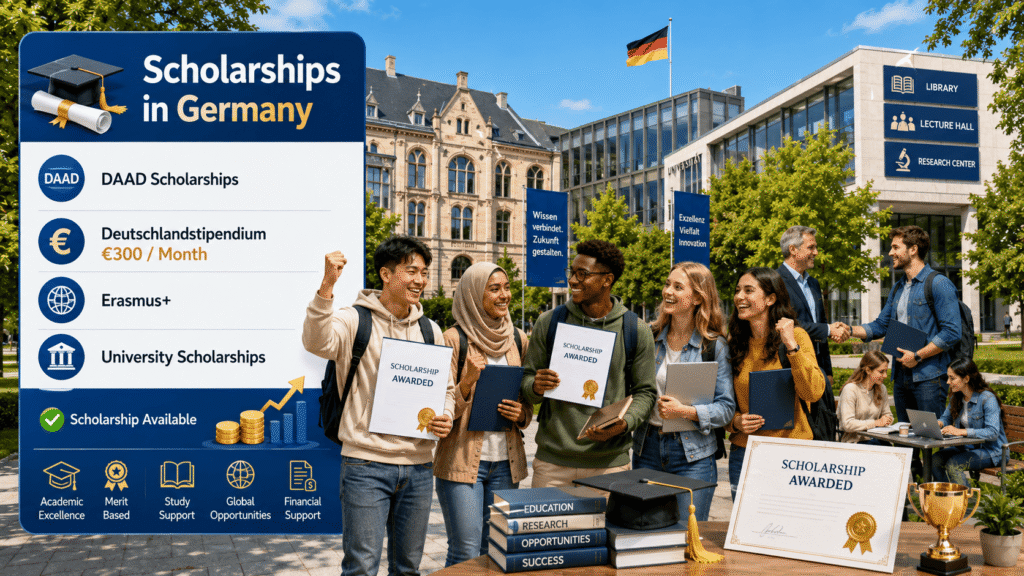
Though even public universities in Germany are affordable already, there are several scholarships available to costs reduce further:
- DAAD Scholarships German Academic Exchange Service offers scholarships for applying students to public universities in Germany at all levels, from bachelor to PhD.
- Deutschlandstipendium Merit based scholarship offering EUR 300 per month, available at many public universities in Germany, funded jointly by government and private sponsors.
- Erasmus+ Scholarships For students enrolled in programs across joint European institutions, including many public universities in Germany.
- University specific scholarships Many institutions offer their own programs funding for international outstanding students, often based on academic merit or financial need.
Applying early and maintaining strong academic profile increases your chances of scholarship securing at public universities in Germany. It is also good idea to prepare strong letter motivation and gather recommendation letters well ahead of scholarship deadlines, since competition for seats funded is usually high.
Cost of Living while Studying at Public Universities in Germany:
While tuition at public universities in Germany is low or student free need still to budget for living expenses. On average students studying international at public universities in Germany spend between EUR 800 and EUR 1,200 per month covering:
- Accommodation rent
- Food and groceries
- Health insurance
- Transportation
- Study materials and personal expenses
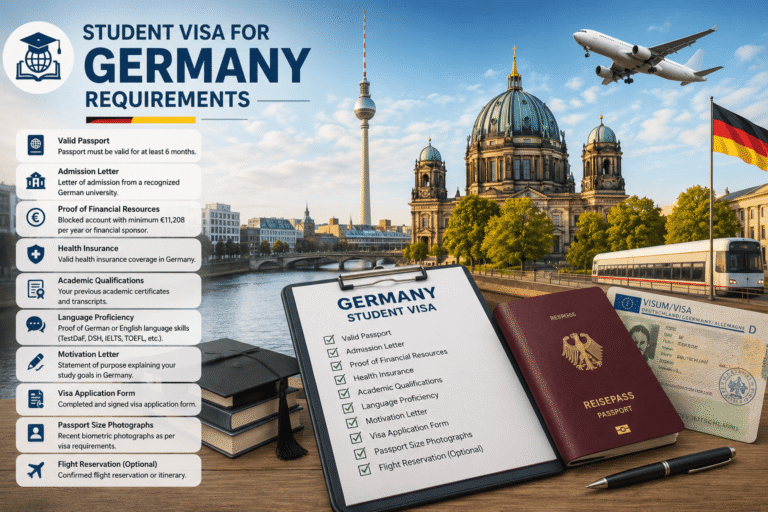
To apply for student visa, most public universities in Germany proof require of blocked account with sufficient funds to cover one year of living expenses, which is currently around EUR 11,904. Living costs also heavily depend on city you choose Munich and Berlin tend to be more expensive, while cities like Leipzig or Dresden offer cost lower of living. Sharing flat with other students known as WG or Wohngemeinschaft is popular way to cut down monthly rent.
Public University in Germany vs Private Universities:
Many wonder students whether to choose public universities in Germany or private institutions. Here’s quick comparison:
| Factor | Public Universities in Germany | Private Universities |
|---|---|---|
| Tuition Fees | Free or very low | Expensive |
| Recognition | Widely recognized | Varies by institution |
| Class Size | Larger | Smaller, more personalized |
| Research Opportunities | Strong | Limited in some cases |
| Language of Instruction | German and English | Mostly English |
For most international students public universities in Germany remain preferred choice due to affordability and academic strong reputation. If you’d rather combine studies with hands on work experience and salary, it’s worth comparing this path with dual study in Germany, which blends classroom learning with training practical at company.
FAQS About Public University in Germany
Are public university in Germany really free ? Most public university in Germany do not charge tuition fees, though students pay small semester contribution. Some universities have introduced fees for non EU students, so current check policies.
Can I study at public university in Germany without knowing German ? Yes many public universities in Germany offer master’s programs taught fully in English, especially in STEM and business fields.
How long does it take to get admission into public universities in Germany ? The process usually takes few months so it’s best to start preparing at least six to eight months before your intended intake.
Do public universities in Germany accept students without IELTS ? Some accept alternative proof of English proficiency, such as a medium of instruction certificate, but this varies by institution, so it’s best to check individually.
Is work allowed while studying at public university in Germany ? Yes international students are permitted generally to work part time for up to 140 full days or 280 half days per year, which helps cover some living expenses.
Which fields are most popular among international students at these universities ? Engineering, computer science, business administration and science data remain among most popular fields, largely because of industry strong demand and English taught program availability.
Conclusion:
Choosing public university in Germany is one of decisions smartest an international student can make. With free or low tuition fees, respected globally degrees, strong industry connections and excellent post study work opportunities, these institutions incredible offer value for students who want quality education without heavy financial burden. By understanding admission requirements, application process and scholarship options, you can successfully secure place at one of top public universities in Germany and take major step toward bright academic and professional future. And if a traditional university path doesn’t feel like the right fit, our guides on Ausbildung and dual study programs can help you explore routes to studying and working in Germany.
About the Author






5 thoughts on “Public Universities in Germany: Complete Guide for International Students”