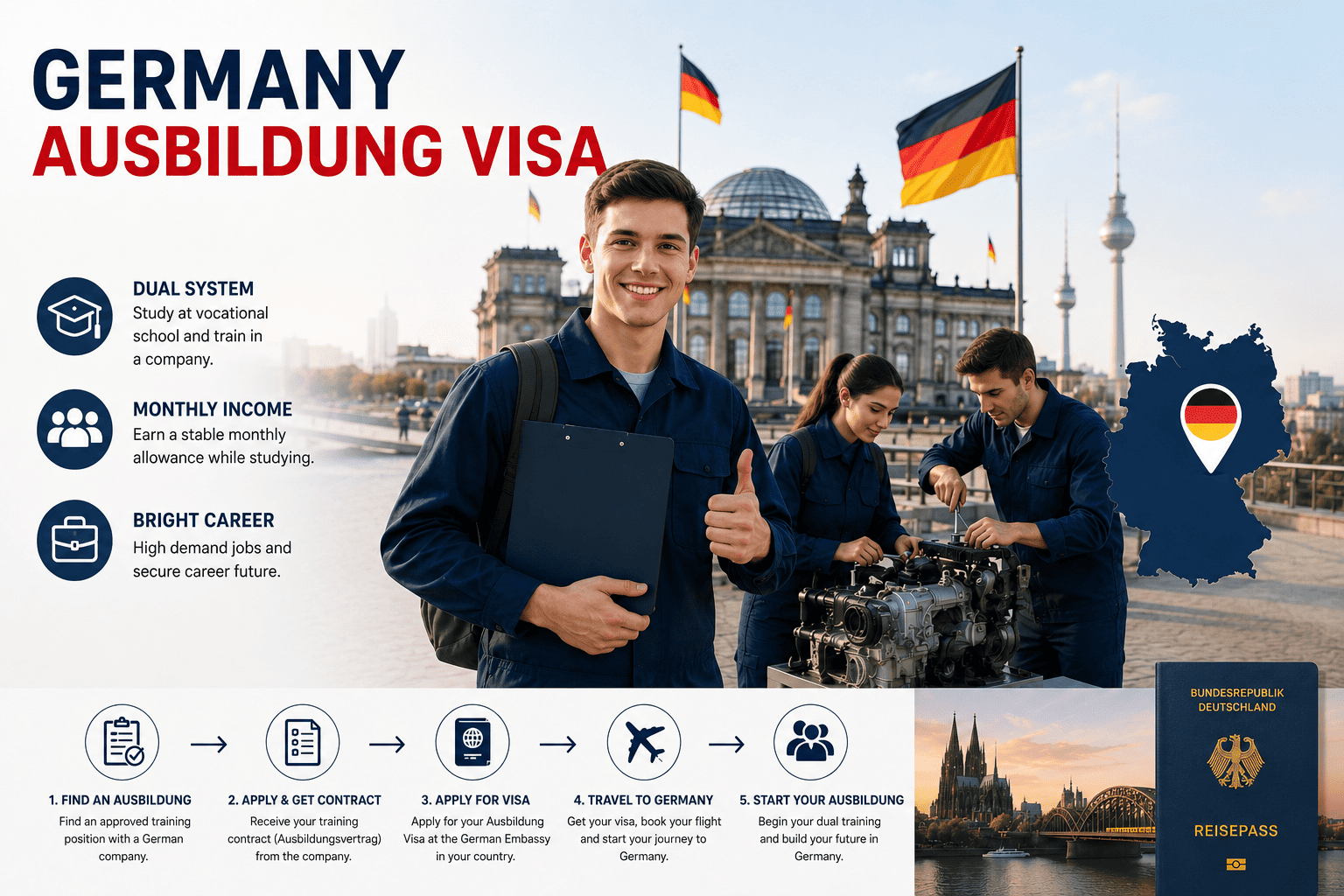
The Germany Ausbildung visa is the legal gateway for non-EU citizens who want to pursue paid, hands-on vocational training in Germany. Unlike student visa, Germany Ausbildung visa is tied to an actual contract training with an employer, which several changes of financial and documentation rules. This guide covers every German Ausbildung visa requirement for 2026, including blocked account rules, language level, fees and the exact steps to apply.
Germany Ausbildung visa is National Visa Type D for non EU citizens starting paid vocational training (Ausbildung) in Germany. Core requirements include signed Ausbildungsvertrag training contract, B1 level German, health insurance and proof of financial resources though sufficient training salary can often replace blocked account. Processing takes several weeks to a few months, and the visa fee is around €75.
What Is the Germany Ausbildung Visa?
The Germany Ausbildung visa allows international candidates to enter Germany for a recognized dual vocational training program — combining paid, on-the-job work with classroom instruction. Like the student route, this is a National Visa (Type D), since Ausbildung programs typically run 2–3.5 years, well beyond the 90-day Schengen limit. Once in Germany, the Germany Ausbildung visa converts into a residence permit tied to your training contract.
If you’re still deciding between vocational training and a full degree, our guide on what Ausbildung in Germany actually is explains the difference, while our breakdown of the student visa for Germany requirements is the better starting point if you’re pursuing a university degree instead of hands-on training.
Germany Ausbildung Visa 2026 Key Facts at Glance
| Detail | Information |
|---|---|
| Visa Type | National Visa Type D for vocational training |
| Prerequisite | Signed Ausbildungsvertrag training contract with German employer |
| Language Level | B1 German CEFR, sometimes A2 for select trades |
| Minimum Apprentice Wage 2026 | ≈ €724/month gross Year 1, rising each training year |
| Blocked Account | Only if salary is below the subsistence minimum ~€992/month |
| Visa Fee | ≈ €75 |
| Processing Time | Several weeks to few months |
German Ausbildung Visa — Full Document Checklist
Before booking your appointment, gather every item on this Germany Ausbildung visa checklist. Prepare two sets of copies, since German missions typically require originals plus duplicates:
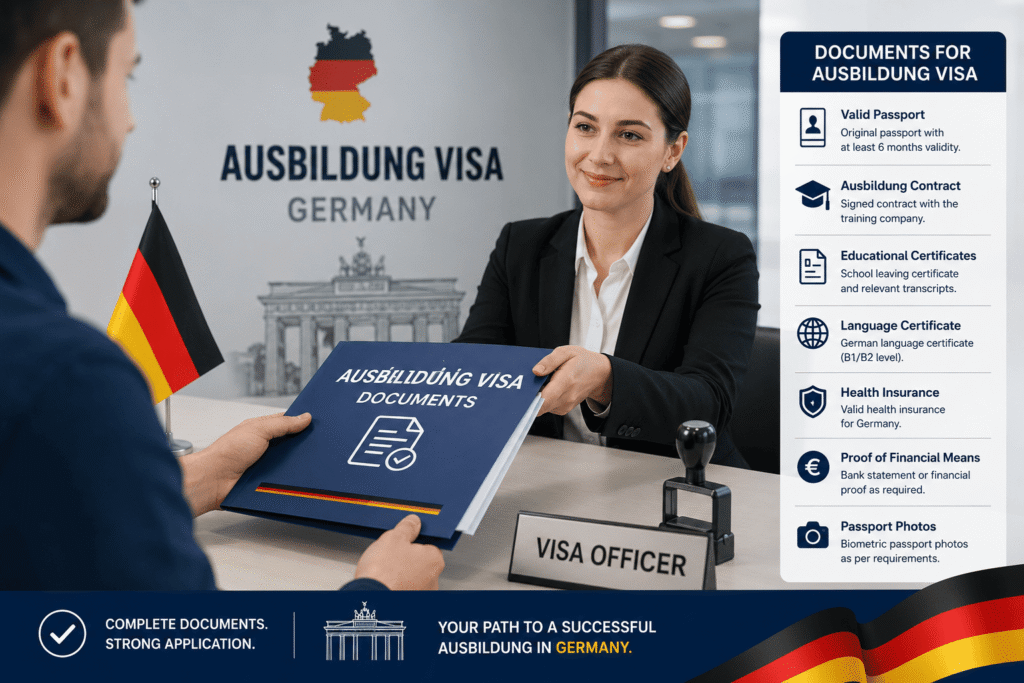
- Signed Ausbildungsvertrag — your official training contract, registered with the relevant Chamber (IHK or HWK)
- Valid passport with at least two blank pages
- Completed National Visa application form
- Two biometric passport photos
- Proof of German language proficiency — usually B1, occasionally A2 for certain trades
- CV (Europass format) and academic/school certificates
- Health insurance proof covering your arrival period
- Proof of financial resources — your salary contract, or a blocked account if your pay falls below the subsistence threshold
- Visa fee payment receipt (approximately €75)
Every Germany Ausbildung visa application is reviewed against this exact list, so incomplete files are the most common reason for delays at the consulate stage.
Financial Proof for the German Ausbildung Visa
This is where the Germany Ausbildung visa differs most from a student visa. Because apprentices earn a salary, the blocked account isn’t always required:
- Company-based (paid) Ausbildung: If your net monthly salary meets or exceeds the government’s subsistence minimum (around €992/month in 2026), your training contract alone usually satisfies the financial requirement — no blocked account needed.
- Salary below the threshold: If your pay falls short, you only need a blocked account covering the gap — for example, a €150/month shortfall requires roughly €1,800 for the year, not the full €11,904.
- School-based (unpaid) training: Programs without a salary, such as some healthcare or design courses, require the full blocked account amount (€11,904, or €992/month) just like a student visa.
- Approved providers: Expatrio, Fintiba, and Coracle are widely accepted for opening a blocked account tied to a Germany Ausbildung visa application.
If your training program requires a blocked account, the process and providers are nearly identical to the ones covered in our student visa for Germany requirements guide, which walks through blocked account setup step by step.
German Language Requirements for the Ausbildung Visa
Most consulates require B1-level German (CEFR) before approving a Germany Ausbildung visa, since apprentices need to communicate with colleagues, trainers, and vocational school instructors from day one. A handful of trades — particularly in manual or technical fields with less classroom instruction — accept A2-level German, but B1 remains the safer standard to prepare for. If you’d rather avoid the German-language requirement altogether, compare this path against university programs that let you study in Germany in English for free, since degree-track visas have different language rules than the Germany Ausbildung visa.
How to Apply for the Germany Ausbildung Visa
Applying for a Germany Ausbildung visa follows a clear sequence, starting well before you ever reach the consulate:
- Secure a training contract: Find and sign an Ausbildungsvertrag with a German employer before applying — this is the foundation of the entire Germany Ausbildung visa process.
- Confirm Chamber registration: Your employer registers contract with IHK Chamber of Industry and Commerce or HWK (Chamber of Crafts).
- Gather and authenticate documents: Some certificates may need translation or allow apostille several weeks for this step.
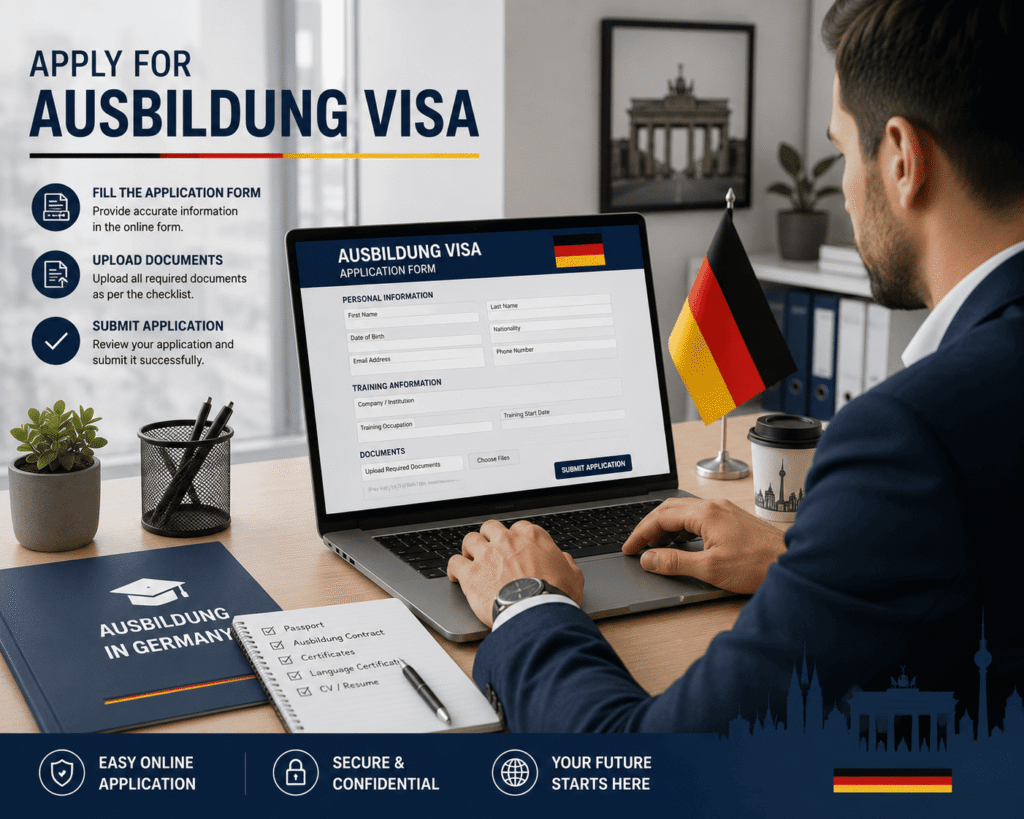
- Apply through the Consular Services Portal: Submit your Germany Ausbildung visa application via the Federal Foreign Office’s official online Consular Services Portal (digital.diplo.de), then book a biometrics appointment at your local mission.
- Attend your consulate interview: Expect questions about your training field, your German level, and your plans in Germany.
- Ask about the accelerated procedure: If your employer is willing, they can request the beschleunigtes Visumverfahren (§81a AufenthG) through the local Ausländerbehörde, which can shorten processing time — for an added employer fee.
- Wait for your decision Once approved your Germany Ausbildung visa is affixed to your passport.
Applicants coming from Bachelor’s level background who are still weighing options university should also review public universities in Germany and Technical University of Munich before committing to the vocational route.
Germany Ausbildung Visa: Costs and Timeline
| Item | Cost / Timeline |
|---|---|
| Visa Fee | ≈ €75 |
| Blocked Account (if required) | €11,904 (or gap amount only, if partly salaried) |
| Minimum Apprentice Wage | ≈ €724/month gross (Year 1, 2026 rates) |
| Health Insurance | ≈ €120–€160/month |
| Standard Processing | Several weeks to a few months |
| Accelerated Processing | Faster, via employer-sponsored §81a AufenthG procedure |
Popular Fields That Qualify for the Germany Ausbildung Visa
Not every job qualifies you for a Germany Ausbildung visa — it must be a recognized dual vocational training occupation under German law. The fields with strongest demand for international applicants include:
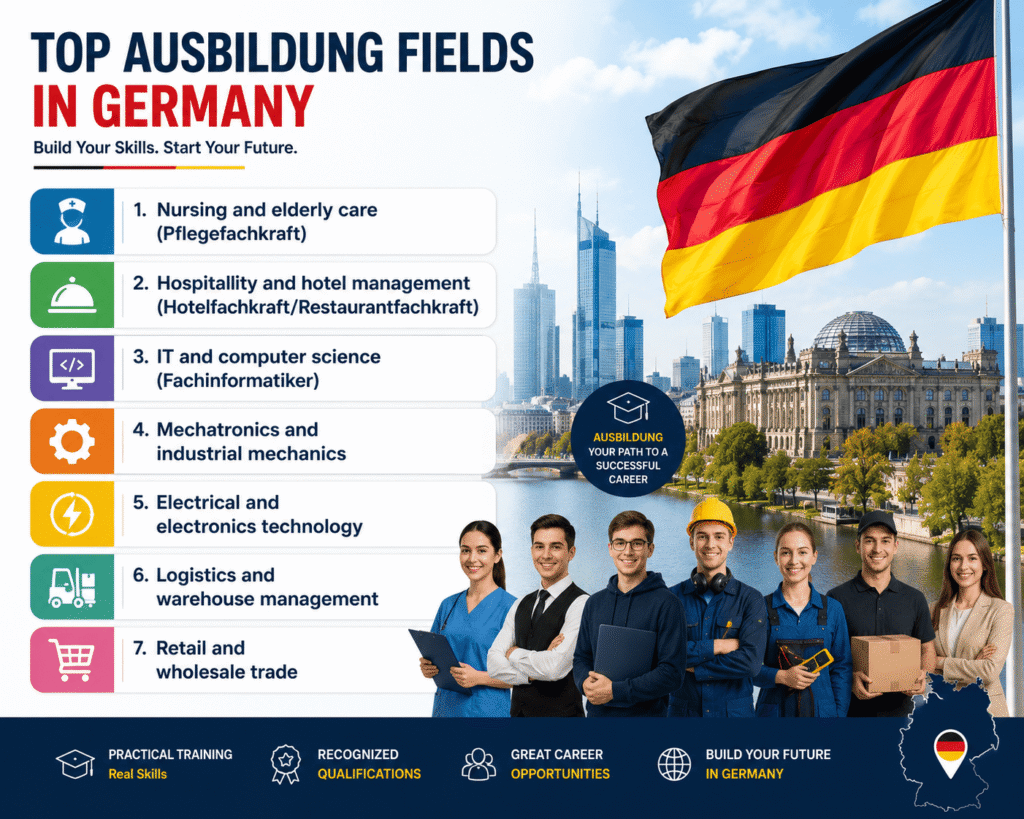
- Nursing and elderly care Pflegefachkraft
- Hospitality and hotel management Hotelfachkraft/Restaurantfachkraft
- IT and computer science (Fachinformatiker)
- Mechatronics and industrial mechanics
- Electrical and electronics technology
- Logistics and warehouse management
- Retail and wholesale trade
Nursing and IT roles in particular see fast-tracked processing for the Germany Ausbildung visa, since Germany faces significant labor shortages in both sectors and actively recruits internationally.
Life and Costs During Your Germany Ausbildung Visa Period
Once your Germany Ausbildung visa is approved and you arrive, budgeting makes correctly transition much smoother. Monthly typical costs include:
- Rent: €400–€700/month depending on the city (smaller towns are significantly cheaper than Munich or Frankfurt)
- Food and groceries: €200–€300/month
- Health insurance: €120–€160/month often subsidized partly for apprentices
- Transport: Covered in part by Deutschlandticket, roughly €58/month for regional unlimited travel
Because apprentice wages are modest in first year, many Germany Ausbildung visa choose holders smaller cities or towns with a lower cost of living, especially outside Bavaria and metro major areas. Wages typically rise 5–10% each training year, easing the budget gap by the second or third year of the program.
Germany Ausbildung Visa vs Student Visa
It’s easy to confuse the two paths, but the Germany Ausbildung visa and the student visa serve different goals. The Ausbildung visa is tied to a paid training contract and a specific employer, while a student visa supports full-time university study and relies more heavily on a blocked account for proof of funds. If you’re unsure which route fits your goals and finances, our detailed breakdown of student visa for Germany requirements lays out the university-track documents, fees, and blocked account rules side by side with what’s covered here for the Germany Ausbildung visa. Some applicants also explore dual study in Germany as a middle path that blends a degree with paid, structured work experience.
Germany Ausbildung Visa Apply Portal — Where to Submit Online
As of 2025–2026, every Germany Ausbildung visa application is submitted digitally through the German Federal Foreign Office’s official Consular Services Portal at digital diplo. This is the only official Germany Ausbildung visa apply portal — avoid third-party sites that charge extra fees to “process” your application, since the government portal itself is free to use. Here’s how the portal fits into your application:
- Create an account on the Consular Services Portal and select the National Visa (Type D) category for vocational training.
- Fill out online form and upload copies scanned of every document from your Germany Ausbildung visa checklist.
- Submit for preliminary review staff mission check your documents digitally and flag anything missing before you travel to consulate.
- Book your biometrics appointment once your file passes preliminary review, to fingerprints submit, present originals and visa pay fee in person.
- Track your application status directly inside portal instead of emailing consulate for updates.
This rollout — which reached all 167 German visa sections worldwide by 2026 — was specifically designed to cut Germany Ausbildung visa and student visa processing times, moving cases that once took up to six months down toward the 6–12 week range covered earlier in this guide.
Germany Ausbildung Visa Policy and Updates 2026
Germany’s immigration framework has moved quickly over past two years and several changes directly affect the Germany Ausbildung visa in 2026. Here what’s new:
- Full digital rollout Consular Portal Services, first launched January 2025, is now fully operational at every German worldwide mission, replacing old paper based Germany Ausbildung visa application process entirely.
- Skilled Immigration Act refinements: Ongoing updates to Fachkräfteeinwanderungsgesetz continue to entry ease for vocational and skilled applicants, including recognition simplified pathways for foreign qualifications tied to training or contract work.
- Recognition partnerships: Some regulated trades now allow applicants to begin their Germany Ausbildung visa process before full qualification recognition is complete, with the employer committing to support recognition after arrival.
- Residence Act amendments: Technical and updates procedural to Aufenthaltsgesetz took effect in early 2026, residence refining permit rules that apply once your Ausbildung visa converts after arrival.
- Continued labor shortage focus Germany reports still shortfall of roughly 400,000 workers skilled and annually tradespeople, meaning demand for Germany Ausbildung visa applicants in nursing, IT and trades skilled strong remains through 2026.
Because Germany Ausbildung visa details policy shift as new phase regulations in, always confirm latest rules on official Foreign Federal Office site before submitting your application.
Germany Ausbildung Visa — Frequently Asked Questions
Where do I apply for the Germany Ausbildung visa online?
All Germany Ausbildung visa applications go through the official Consular Services Portal at digital.diplo.de — the only government-run apply portal for this visa category.
What is the Germany Ausbildung visa?
The Germany Ausbildung visa is a National Visa (Type D) that lets non-EU citizens enter Germany for paid, dual vocational training tied to a signed employer contract.
Do I need a blocked account for the Germany Ausbildung visa?
Only if your training salary falls below the government’s subsistence minimum (around €992/month) — if your contract pays enough, the salary itself usually satisfies the financial requirement.
What German level do I need for the Germany Ausbildung visa?
Most consulates require B1-level German, though a few manual or technical trades may accept A2.
How long does Germany Ausbildung visa take to process ?
Standard processing runs several weeks to few months, though an employer sponsored accelerated procedure can shorten this timeline.
How is the Germany Ausbildung visa different from a student visa?
The Ausbildung visa is tied to a paid training contract and often doesn’t need a full blocked account, while a student visa generally requires the full €11,904 blocked account regardless of income.
Final Thoughts on Germany Ausbildung Visa
Successfully securing your Germany Ausbildung visa comes down to sequencing lock in your training contract first, confirm your level language early, calculate whether you actually need blocked account, and submit complete file through Consular Services Portal well before your training start date. Applicants who understand full Germany Ausbildung visa process in advance consistently avoid the delays that catch last minute applicants off guard.
About the Author







4 thoughts on “Germany Ausbildung Visa 2026: Complete Guide to Requirements & Application”