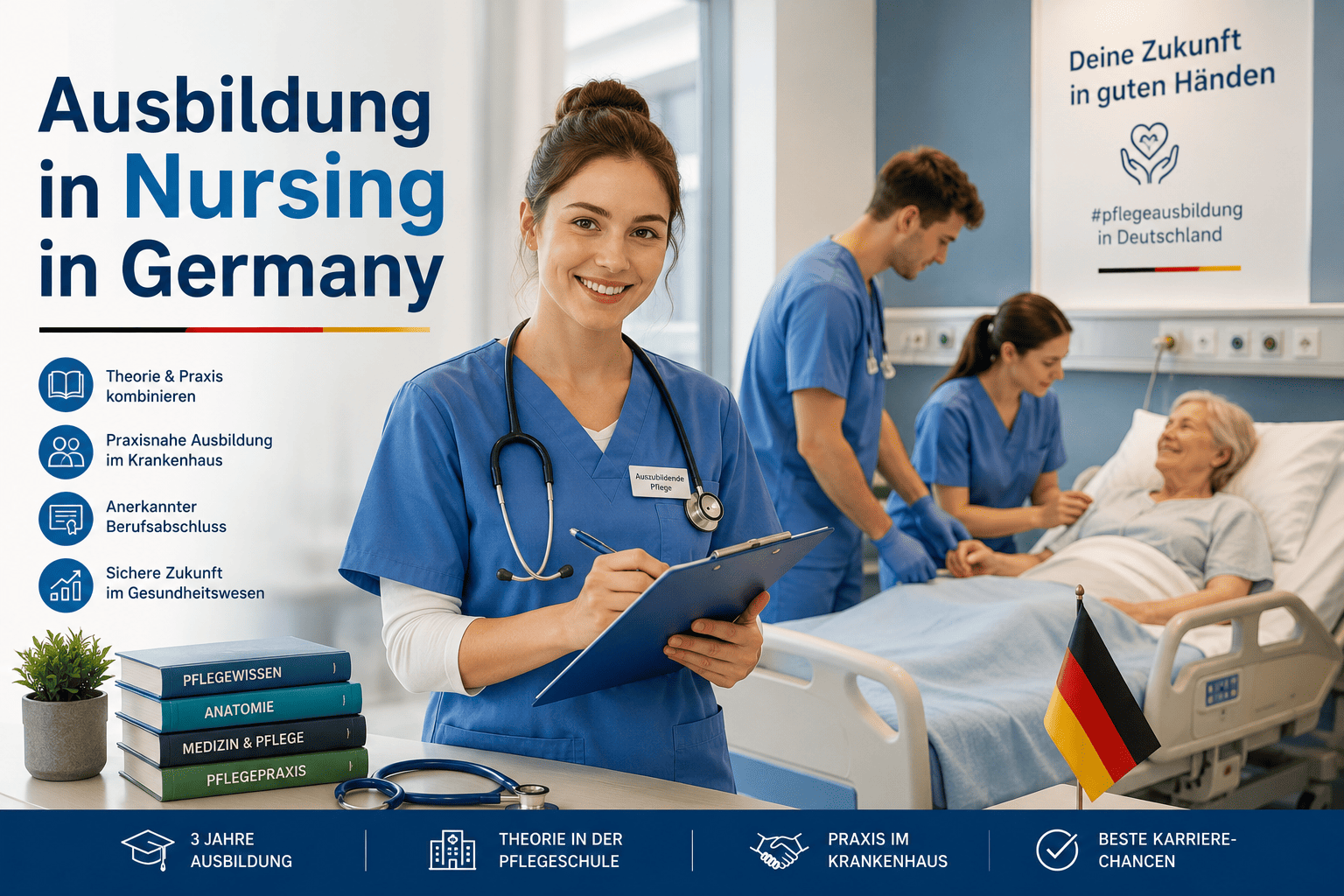
Ausbildung in nursing in Germany is a paid, structured way to become a qualified nurse in three years. You need school certificate, German language skills and visa. Salaries start around €1200–€1490 per month and grow each year, reaching €3000+ after graduation.
Whether you search for ausbildung nursing in Germany requirements, ausbildung nursing in Germany salary or ausbildung in nursing in Germany for foreigners, stays path same: learn German, get your documents ready, directly apply and start earning while you train. This program sits inside Germany wider Ausbildung system, so basic rules will already familiar feel if you’ve researched other trades.
What Is Ausbildung in Nursing in Germany ?
Ausbildung in nursing in Germany is Germany’s official training path for future nurses. The German name is Pflegeausbildung. It mixes classroom learning with real hospital work, and it sits alongside dozens of other ausbildung courses in Germany that follow a similar paid, dual-training format.
Key facts about nursing ausbildung in Germany:
- Duration 3 years, full time
- Pay: You earn stipend every month during training
- Structure: Classroom part classroom, part hospital ward
- Result: State recognized nurse qualification Pflegefachmann / Pflegefachfrau
- Recognition: Valid across the European Union
This program exists because Germany has a big nursing shortage. Nursing is one of official Germany’s bottleneck occupations. That means the country needs more nurses than it has. This is good news if you want ausbildung in nursing in Germany as a career path, because employers are actively hiring. You can read more about the profession and its structure on Wikipedia’s overview of nursing in Germany, which covers how the role evolved from separate care tracks into one generalist qualification.
Nursing Ausbildung in Germany Requirements
To join Ausbildung in nursing Germany, you need completed school qualification 10–12 years of schooling, German language skills at B1 or B2 level, clean health record and valid training visa (Section 16a). Most training providers also want motivation short letter and, in some cases, an interview.
That is short answer. Now let break it down.
Basic requirements for Ausbildung in Nursing Germany
- School certificate: You need proof you finished secondary school. requirements can vary slightly by state and employer.
- German Language level: Most schools ask for B1 as minimum. Many prefer B2. Better German means an easier start.
- Age: No strict age legal limit, but most trainees are under 30. Some accept centers candidates up to 35 with strong experience.
- Health check: You must be medically fit for hospital work. A doctor’s certificate is often required.
- Visa: You need a training visa under Section 16a of the German residence law. Our Germany Ausbildung visa guide walks through this exact process step by step, documents including and processing time.
- Motivation Letter: Many hospitals want short letter explaining why you chose nursing.
These are the core ausbildung in nursing Germany requirements. If you meet them, you can directly apply to hospitals, care homes or clinics.
Ausbildung in Nursing in Germany Requirements (General Rules)
Not just for nursing — these are the general ausbildung in nursing in Germany requirements that apply to most vocational training programs:
- A recognized school certificate (equal to German secondary school)
- German language proof (usually B1, sometimes A2 for entry, B1 for the visa)
- A signed training contract with a German employer
- Proof you can support yourself (often waived for nursing, since the stipend is high enough)
- A clean criminal record certificate
Nursing is treated slightly better than other trades. Because pay is higher, many nursing trainees do not need to show a blocked bank account. Other Ausbildung fields usually require this, so it’s worth comparing against our full student visa for Germany requirements breakdown if you’re weighing nursing against a university path instead.
Requirements for Ausbildung in Nursing Germany for Foreigners
Ausbildung in Nursing in Germany for foreigners follows the same base rules, plus a few extra steps for people applying from outside the EU.
- Recognized school certificate: Your certificate must match German secondary school standards. Some countries need a credential check first.
- German Language certificate: From an approved school Goethe Institut, TELC or ÖSD. No IELTS needed — only German counts.
- Visa application Apply for Ausbildung visa at Embassy German or consulate in your home country.
- Document translation: Some papers may need certified German translation.
- Health insurance: Required before you start training.
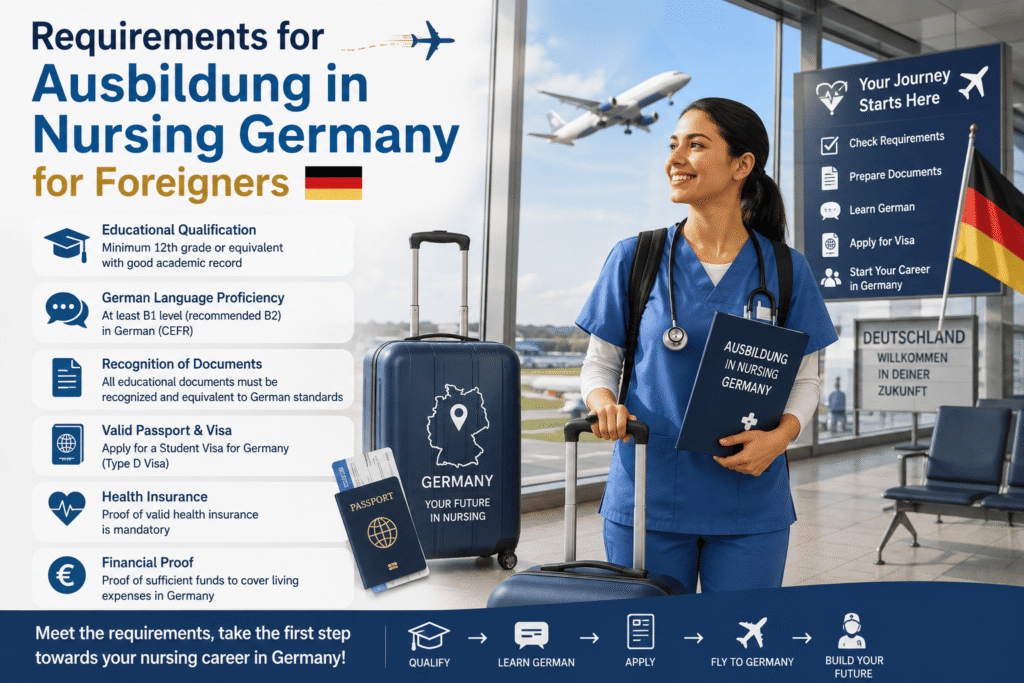
For ausbildung in nursing in Germany for foreigners, the safest path is: learn German first, then apply directly to hospitals or through a licensed placement agency. Avoid agencies that ask for large upfront fees — legitimate training pays you, it should not cost you thousands before you even start. The official Make it in Germany nursing profile is a reliable government-run source for checking current placement programs.
Documents You Need to Apply
Before you apply gather these documents. Having them saves ready time and speeds up your visa process.
- School Leaving certificate with translation certified , if not in German or English
- German Language certificate B1 or B2, from Goethe institut, TELC or ÖSD
- Updated CV European format is best
- Motivation letter in German
- Passport copy (valid for at least the length of training)
- Health certificate from a licensed doctor
- Police clearance certificate (criminal record check)
- Passport photos (biometric format)
Keep digital and copies printed of everything. German employers and often embassies ask for both.
Pros and Cons of Ausbildung in Nursing in Germany
Like any career path, this program has strong points and a few challenges. Knowing both helps you plan better.
Pros:
- No tuition fees — training is free
- Paid salary from month one
- Qualification recognized across the EU
- High job demand after graduation
- Clear path to long-term residency
Cons:
- German language study takes time and effort
- Moving to a new country is a big life change
- Hospital shifts can be physically demanding
- Some paperwork and visa steps take patience
Most people who plan ahead — especially with German language study — find the process manageable.
Life After Ausbildung: Career Path
Once you finish nursing ausbildung in Germany, you become fully qualified nurse Pflegefachfrau/Pflegefachmann. Your career options grow fast from here.
- Work in hospitals, homes care or outpatient clinics
- Apply for a permanent work contract with your training employer
- Move to another EU country, since qualification is recognized region wide
- Specialize further in area like intensive care, pediatrics or geriatrics
- Apply for permanent residency after number set of working years
Germany nursing shortage means most graduates find job quickly, often with their training hospital.
Nursing Ausbildung Salary in Germany
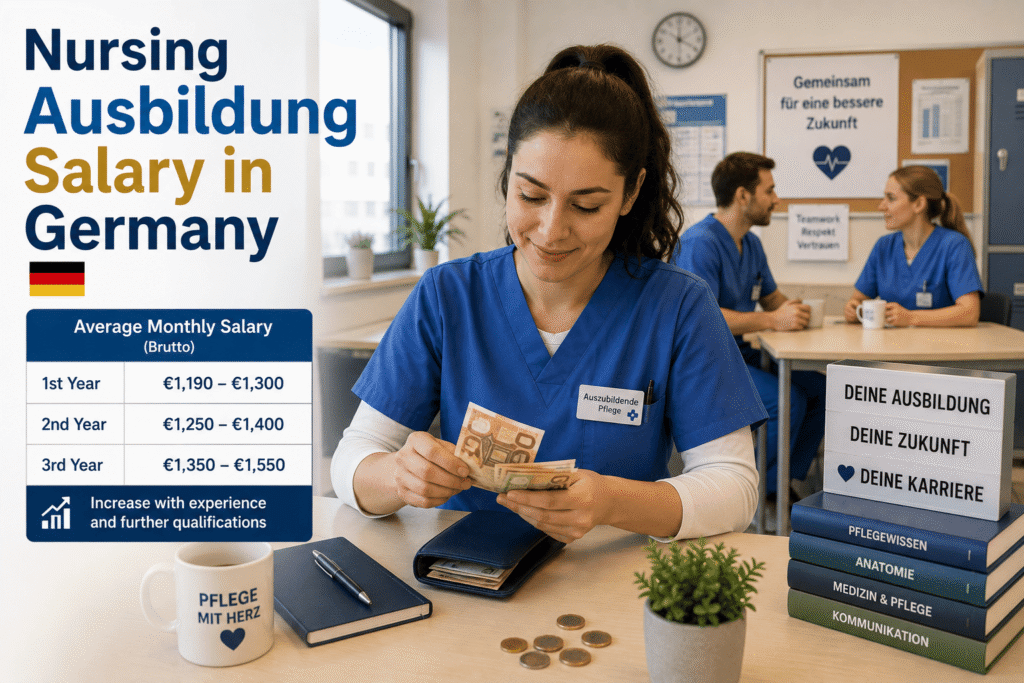
Nursing Ausbildung salary in Germany starts around €1,200–€1,490 gross per month in year one and rises each year. By year three, trainees can earn close to €1600–€1800 per month. After graduation qualified nurses earn around €3000–€3900 per month, depending on region and employer.
Nurse Ausbildung Salary in Germany by Year
| Training Year | Approx. Monthly salary Gross |
|---|---|
| Year 1 | €1200 – 1490euro |
| Year 2 | €1300 – 1550euro |
| Year 3 | €1400 – 1800euro |
| After graduation | €3000 – 3900euro |
Public-sector rates (TVAöD Pflege) are usually higher than private ones. Ausbildung nursing in Germany salary also depends on the city — Munich and Frankfurt tend to pay more, but the cost of living is higher too. Check our cost of living in Germany guide before picking a training city, so your stipend actually stretches far enough each month.
German Ausbildung nursing salaries are considered strong compared to other vocational programs in Germany. Nursing pays more than most trades because of the ongoing shortage.
Ausbildung in Nursing Assistant
Not everyone wants full 3 year program right away. Ausbildung in nursing assistant Pflegehelfer/Pflegeassistent is shorter route.
- duration: 1 to 2 years
- Entry requirement: Lower — often no formal school certificate needed
- German level: A2 to B1 is usually enough
- Career use: Many people use it as stone stepping into full nursing ausbildung program later
This is good option if your German is not strong yet enough or if you want to test hospital work before committing to three years.
How to apply for Nursing Ausbildung in Germany
- Learn German. Reach at least B1 level. This is non-negotiable for most hospitals.
- Get your school certificate checked. Confirm it matches German standards.
- Search for open positions. Hospitals, care homes, and clinics post openings directly, or use a licensed agency.
- Apply with your documents. CV, certificates, language proof, and a short motivation letter.
- Attend the interview. Often done online first, by video call.
- Sign your training contract. This is required for your visa application.
- Apply for your visa. Section 16a Ausbildung visa at your local German embassy.
- Move and start training. Your employer usually helps with housing and onboarding.
Best Cities for Nursing Ausbildung in Germany
- Berlin — large hospitals, many training spots
- Munich — high-quality facilities, strong pay
- Hamburg — hospitals with international support programs
- Leipzig — growing healthcare sector
- Frankfurt, Cologne, Düsseldorf — steady demand, good training networks
Common mistakes to Avoid
Many applicants small make mistakes that slow down their journey. To Avoid these:
- Starting the visa process before reaching B1 German. Embassies reject weak applications.
- Paying large upfront fees to unofficial agents. Real Ausbildung employers pay you, not the other way around.
- Sending uncertified translation Use always certified translators for official documents.
- Ignoring health requirements. Get your medical check early, not at the last minute.
- Applying to only one hospital. apply to several to raise your chances.
Planning ahead and checking each requirement early makes the whole process smoother.
FAQs About ausbildung in nursing in germany:
Is ausbildung in nursing in Germany free ?
Yes, There are no tuition fees. You get monthly paid stipend instead of paying for school.
How long does nursing ausbildung in Germany take?
Three years for the full program. The nursing assistant path takes 1–2 years.
Do I need IELTS for nursing ausbildung in Germany?
No. Only a German language certificate is required, not English.
Can I stay in Germany after finishing my nursing ausbildung ?
Yes. Graduates can apply for work visa and often for permanent residency after few years of work.
What is difference between ausbildung nurse Germany and studying nursing at university ?
Ausbildung is paid, practical, and shorter. University nursing degrees are academic, usually unpaid, and can take longer.
Is there an age limit for German ausbildung nursing programs ?
No legal strict limit but most trainees are between 18 and 30. Older applicants with experience are still often accepted.
Do I need money saved before I start ausbildung in nursing in Germany?
Usually not much. Most nursing trainees do not need blocked bank account, since salary training is high enough to cover living costs.
Which German cities hire most nursing ausbildung trainees ?
Berlin, Munich and Hamburg hire most, but smaller cities like Leipzig also have demand strong and less competition.
About the Author