
ACCOMMODATION IN GERMANY FOR AUSBILDUNG STUDENTS
Finding the right accommodation in Germany for international students is one of the biggest challenges before moving abroad — even bigger, in many cases, than getting the visa itself. This guide covers everything: what accommodation actually means in the German context, how much it costs, the different types available, the best platforms to book online, and which companies offer accommodation directly to Ausbildung trainees alongside their training contract.
What Is Accommodation in Germany for International Students?
Accommodation in Germany for international students refers to any legal place to live while studying or training — a dorm room, shared flat, private apartment, or company-provided housing — that you register with the local residents’ office (Bürgeramt) as your official address.
This registered address matters more than most students realize, because it’s required for opening a bank account, getting a SIM card contract, enrolling at university, and applying for or renewing your residence permit. Without a fixed address, almost nothing else in your German administrative process can move forward. That’s why sorting out your housing is usually the very first practical task after visa approval.
Cost of Accommodation in Germany
Monthly accommodation costs in Germany typically range from €250 to €700+, depending on the city, room type, and whether utilities are included.
A rough cost breakdown:
- Student dormitory (Studentenwohnheim): €250–€420 per month, often including utilities and internet
- Shared flat / WG (Wohngemeinschaft): €350–€550 per month, depending on the city and room size
- Private studio apartment: €500–€900 per month, higher in cities like Munich, Frankfurt, or Hamburg
- Temporary sublet or short-term rental: €400–€700 per month, useful for the first few weeks
- Youth hostel (very short-term only): €20–€35 per night
Big cities like Munich, Stuttgart, and Frankfurt sit at the higher end of this range, while smaller university towns such as Leipzig, Dresden, or Chemnitz tend to be significantly cheaper.
Budgeting realistically for accommodation in Germany for international students should always include a small buffer for a deposit (Kaution), which is usually 2–3 months’ rent paid upfront. For a broader view of monthly living expenses beyond just rent, see our full cost of living in Germany guide.
Types of Accommodation in Germany
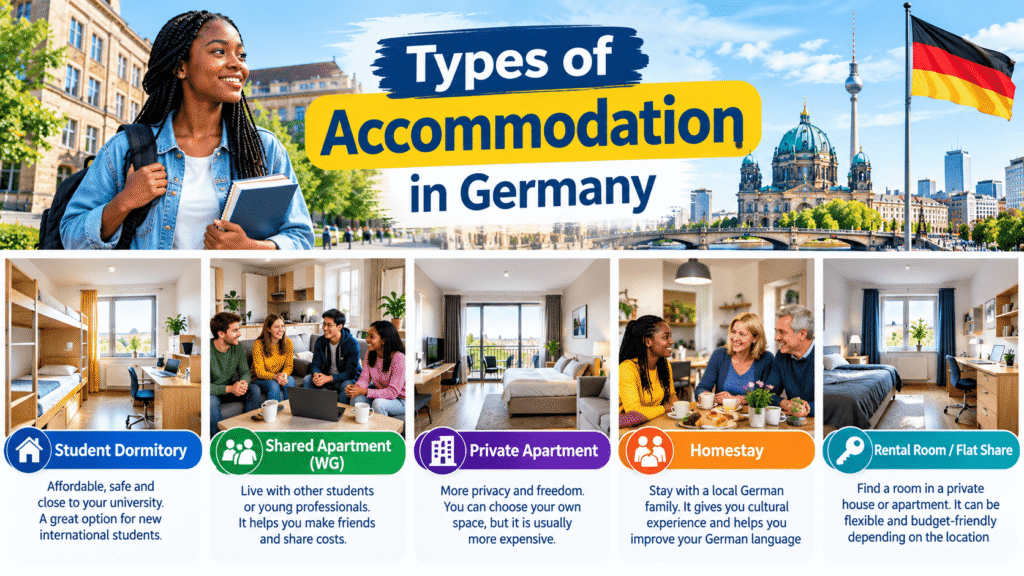
There are several common housing types available, each suited to different budgets and preferences:
- Studentenwohnheim (Student Dormitory): Run by the local Studierendenwerk, Germany’s network of student services organizations, offering the cheapest option but with long waiting lists — apply months in advance.
- WG (Shared Flat): A private bedroom in a shared apartment with common kitchen/living space, popular for its lower cost and built-in social life.
- Private Apartment: A self-contained unit rented independently, offering privacy but at a higher monthly cost.
- Company or Employer-Provided Housing: Some Ausbildung employers and hospitals offer on-site or nearby housing for trainees, discussed in detail below.
- Temporary/Short-Term Rentals: Furnished apartments booked for a few weeks or months while searching for permanent housing.
Choosing between these often comes down to budget versus flexibility — dormitories and WGs are cheaper but slower to secure, while private apartments and short-term rentals are faster but pricier.
Famous Companies for Booking Paid Accommodation in Germany Online
For students who don’t get a dormitory spot in time or prefer more independence, several trusted online platforms make it possible to search and book accommodation in Germany for international students before even arriving in the country:
- Uniplaces — A well-known European platform specializing in verified student housing, popular for booking rooms remotely before arrival.
- Wunderflats — A German platform focused on furnished, flexible-term apartments, ideal for students who want move-in-ready housing without long contracts.
- Studapart — Connects international students directly with landlords and partner universities across Germany for pre-arranged housing.
- HousingAnywhere — A large European rental marketplace that lets students book verified rooms and apartments entirely online, with deposit protection.
- The Fizz (International Campus) — A dedicated student residence brand with modern buildings in cities like Berlin, Frankfurt, Munich, and Stuttgart, bookable directly online.
These platforms are especially useful for students arranging their housing remotely from their home country, since they allow full booking and payment before your visa appointment — which can also help support your visa application with proof of address.
Accommodation in Germany for Ausbildung Students
Ausbildung trainees face a slightly different housing situation compared to university students. Unlike degree students, apprentices usually don’t have automatic access to Studierendenwerk dormitories, since those are reserved for university-enrolled students.
If you’re still getting familiar with how the training system itself works, our guide on what Ausbildung in Germany actually is explains the structure before you start planning housing around it. Instead, Ausbildung trainees typically rely on:
- Private shared flats (WGs) near their training location
- Studio apartments rented independently
- Apprentice-specific dormitories available in some cities
- Housing support or subsidies offered directly by their training company
Because Ausbildung salaries are lower than a full-time wage in the early years, many trainees actively look for employers who either subsidize or fully cover housing costs. This makes checking a company’s accommodation policy just as important as checking the training program itself when comparing job offers.
Ausbildung Companies That Provide Accommodation in Germany Along With Training
Some employers make their Ausbildung offer more attractive by including accommodation support directly, especially in sectors like nursing, hospitality, and logistics where trainee housing near the workplace is genuinely useful for shift schedules.
For a wider list of employers worth comparing beyond just housing perks, see our roundup of the best companies for Ausbildung in Germany. Here are examples of the type of employer support you’ll commonly find:
- Helios Kliniken (situated in multiple cities across Germany) provides accommodation assistance for nursing Ausbildung trainees, particularly in cities with high rental demand.
- Vivantes (situated in Berlin) offers housing support for healthcare apprentices, reflecting the broader trend of hospitals assisting nursing trainees with accommodation.
- Fresenius Medical Care (situated in Bad Homburg, with facilities nationwide) is known to support trainee housing arrangements in select locations as part of its nursing and medical technology Ausbildung programs.
- Steigenberger Hotels (situated in major cities like Frankfurt, Berlin, and Munich) often provides staff or trainee accommodation for hospitality apprentices, a common practice in the hotel industry due to irregular shift patterns.
- Deutsche Bahn (situated nationwide, with major training hubs in cities like Berlin, Frankfurt, and Cologne) offers relocation and housing guidance for some apprentice positions, particularly for trainees moving from other regions.
- Diakonie (situated across multiple German states, with strong presence in cities like Hamburg and Stuttgart) frequently supports nursing and social-care Ausbildung trainees with subsidized staff housing near partner facilities, following the same pattern seen across much of the healthcare sector.
Free or subsidized housing is not guaranteed across every position at these companies — it usually depends on the specific role, city, and current housing availability. Always confirm accommodation in Germany details directly with the employer’s HR or international recruitment team before signing an Ausbildung contract, since offers can change from year to year and vary by branch location.
How to Search and Secure Accommodation in Germany Before You Arrive

A practical timeline can make the difference between smooth move-in and last-minute stress:
- 6+ months before arrival: Apply to Studierendenwerk dormitories if you’re a university student, since waiting lists are long.
- 3–4 months before arrival: Start browsing platforms like Wunderflats, Uniplaces, or HousingAnywhere for shared flats or private apartments.
- 1–2 months before arrival: Confirm any employer-provided housing in writing if you’re an Ausbildung trainee, and finalize a temporary short-term booking as a backup.
- On arrival: Register your address at the local Bürgeramt as soon as possible, since this step unlocks your bank account, SIM card, and residence permit process.
Following this order helps international students and Ausbildung trainees alike avoid the common trap of arriving in Germany with no confirmed place to stay.
Documents Usually Needed to Rent Housing in Germany
Landlords and housing platforms in Germany typically expect a standard set of documents before confirming a booking, and having these ready in advance speeds up the process significantly:
- Proof of enrollment (university admission letter or Ausbildung contract)
- Proof of income or funding (blocked account statement, scholarship letter, or employer contract showing your monthly Ausbildung salary)
- Passport copy and visa/residence permit application confirmation
- Schufa credit report (for long-term private rentals; usually not required for dormitories or platform-booked rooms)
- Deposit payment confirmation (Kaution), typically 2–3 months’ rent
Dormitories and online booking platforms are generally more forgiving toward newcomers who don’t yet have a German credit history, which is one reason they’re often recommended as a first step before searching for a private long-term rental.
Tips for First-Time Renters Moving to Germany
A few practical habits can save new arrivals a lot of frustration:
- Start early, even before your visa is approved. Housing searches, especially for dormitories, often need to begin months in advance.
- Avoid wiring deposit money to unverified landlords. Rental scams targeting international students are common; always use verified platforms or university-approved housing offices.
- Keep a printed copy of your rental contract. You’ll need it for your Bürgeramt registration appointment, and some offices don’t accept digital-only copies.
- Ask about included utilities. Some listings advertise a low base rent but charge separately for heating, electricity, or internet — always confirm the full monthly cost (Warmmiete vs. Kaltmiete).
- Join local student or expat groups. Facebook groups and city-specific forums are often where sublets and shared-flat openings appear before they’re listed publicly.
Taking these steps early significantly reduces the risk of arriving in Germany without a confirmed place to live.
Conclusion
Securing reliable accommodation in Germany for international students takes early planning, but the process becomes manageable once you understand your options: affordable dormitories through the Studierendenwerk, flexible shared flats and private apartments through trusted booking platforms, or employer-supported housing if you’re pursuing an Ausbildung.
Vocational training itself follows Germany’s well-established dual apprenticeship system, and understanding how that system works alongside your housing search will help you plan a realistic budget and timeline.
Whether you’re heading into a university program or a hands-on Ausbildung, starting your accommodation search early — and confirming any employer housing support in writing — will make your first months in Germany far less stressful. For more on the visa side of your move, check our guides on the student visa for Germany requirements and the Germany Ausbildung visa.
About the Author








1 thought on “Accommodation in Germany for International Students”